
From Paper to Tablet: Adamnasoft Dental Software | BeeWeb
One year, one bus, and a lot of small smiles
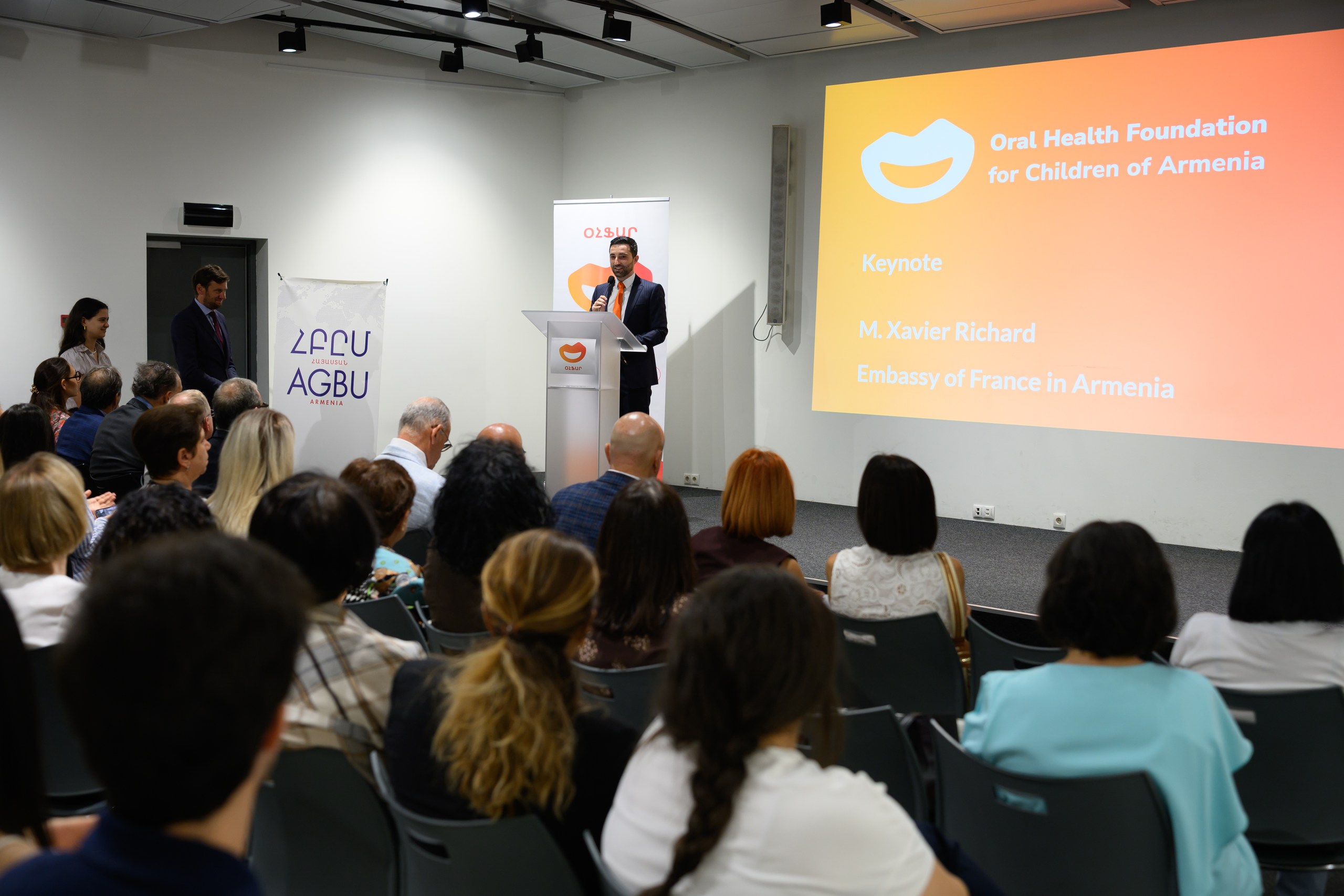
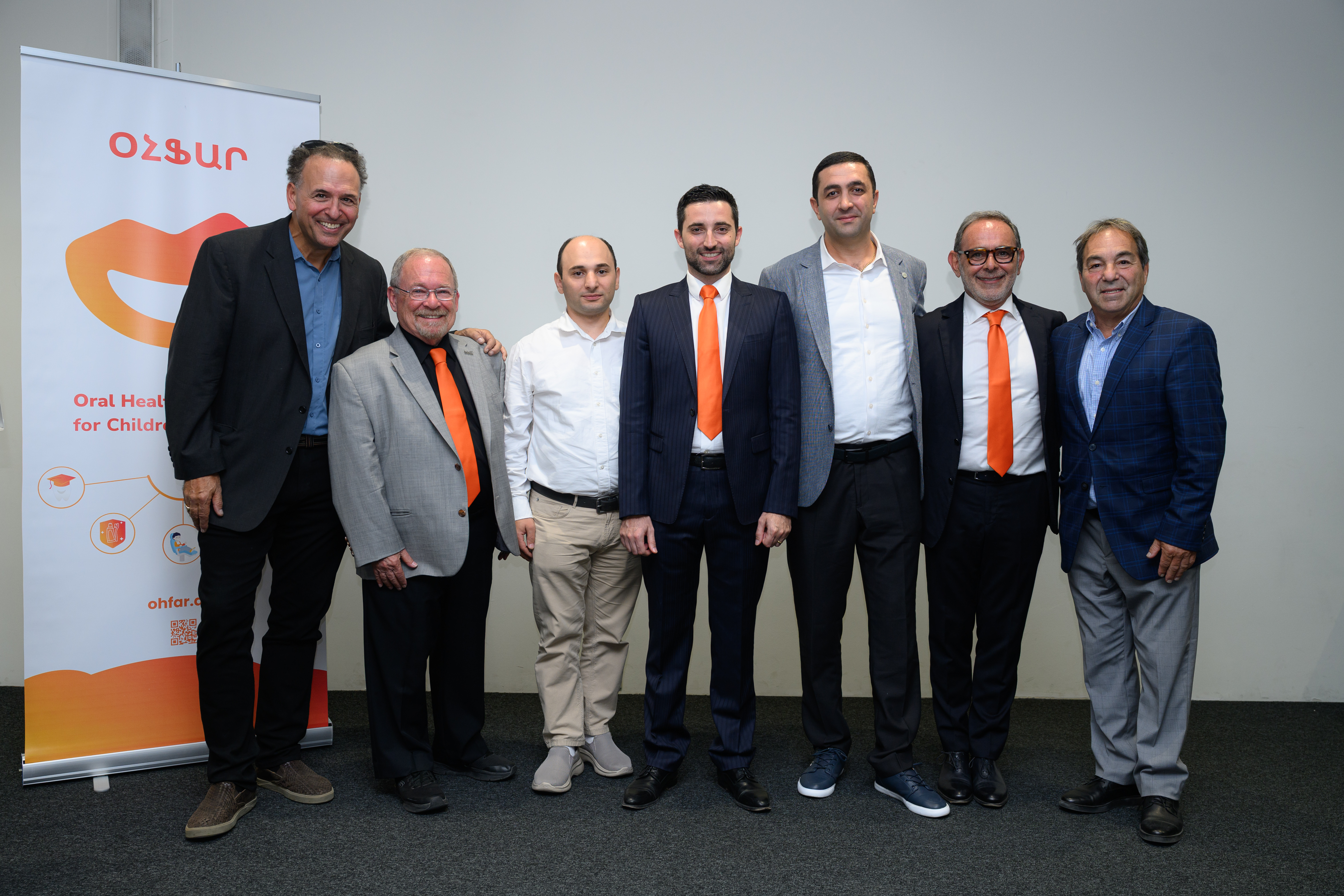
On September 18, 2026, the hall at AGBU Armenia on Melik Adamyan Street filled with dentists, pediatricians, public health specialists, donors and partners. The occasion was OHFAR's first Annual Conference, "OHFAR OR," marking one year of work by the Oral Health Foundation for Children of Armenia.
The agenda covered the foundation's first-year results, clinical cases from children treated over the year, and the progress of Adamnabus, OHFAR's mobile dental clinic. A thread ran through the day as well: the role of digital health, telemedicine, prevention and education in reaching children who live far from a dentist's chair.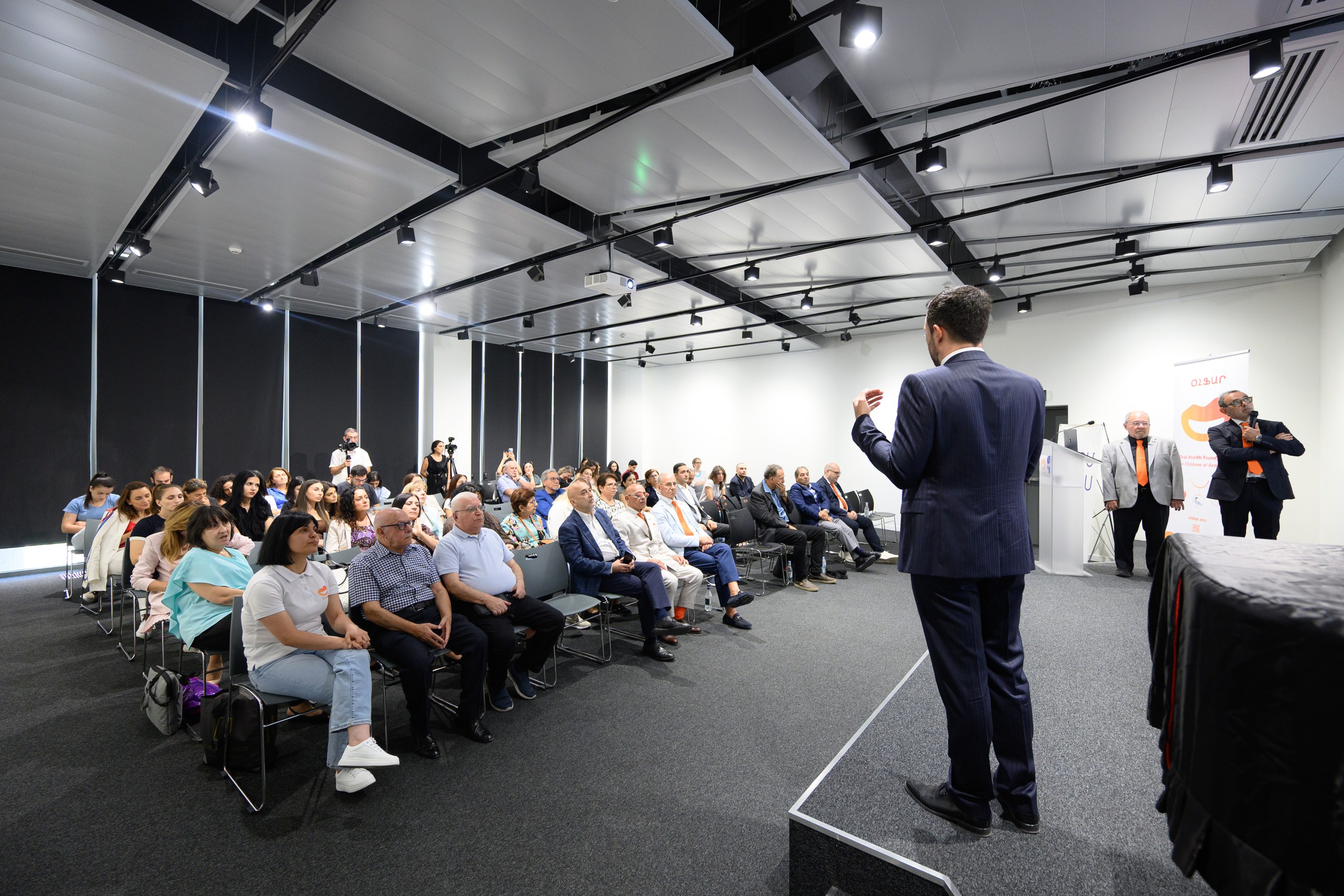
That evening, the same people gathered at the Marriott Hotel in Yerevan for the "Giving Our Children Smiles" Gala Dinner. Every ticket was a donation to OHFAR's work.
For our team at BeeWeb, the day had a quieter meaning. Behind every child screened in that bus over the past year, there is a record, a chart and a treatment plan. All of it lives in Adamnasoft, the platform we have been building with OHFAR since 2025. This is the story of that software: why it exists, how it works, and the engineering choices that let a clinic on wheels run like a modern practice.
Why a mobile clinic needs its own software
Adamnabus brings free screenings, preventive care, fillings and oral health education to children in schools, care centers and municipalities across Armenia. The name blends adamnabouj (Armenian for dentist) and bus. After a pilot of first screenings in December 2025 and a license in partnership with Kapan Medical Center, the program officially launched in Syunik in March 2026.
OHFAR needed a platform that would:
- Hold up during live, high-volume pediatric screenings
- Replace fragmented manual records with one consistent digital workflow
- Reflect the real clinical logic of pediatric dentistry, including mixed baby and adult teeth
- Work comfortably on a tablet, in the field, with a child in the chair
That brief became Adamnasoft.
What Adamnasoft does for the people in the chair, and beside it
Adamnasoft is an all-in-one electronic dental record. Charting, treatment plans, scheduling, payments and analytics live in one connected record instead of five separate tools.
Charting built for children's teeth
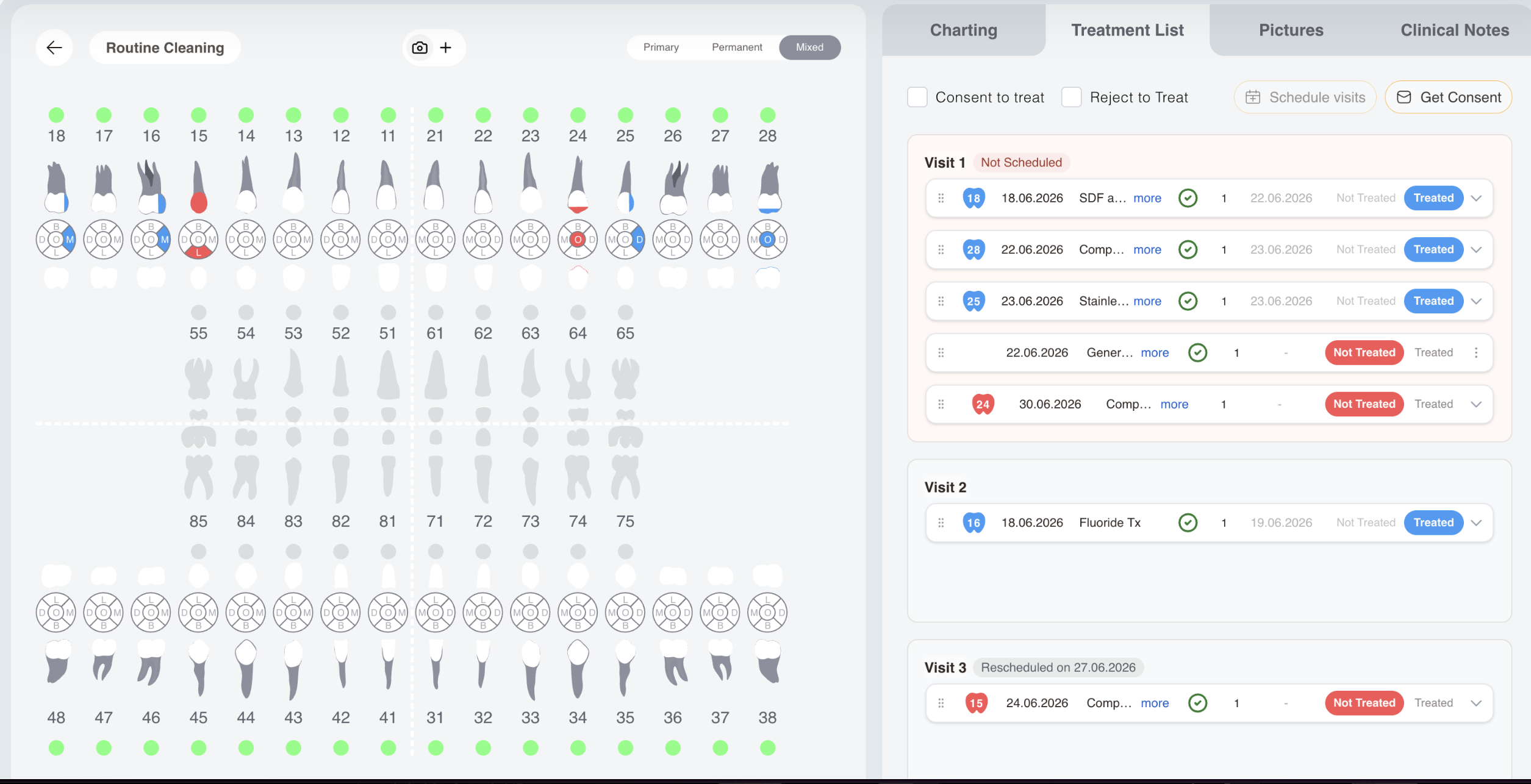
The interactive odontogram shows baby teeth, adult teeth and the mixed dentition in between. Dentists mark conditions tooth by tooth and surface by surface, with color-coded clinical indicators. They can attach photos and write clinical notes on the same screen. The chart even recognizes anterior and posterior teeth on its own, so the dentist taps less and looks at the child more.
Treatment plans and visit records
Each procedure becomes a step in a tailored visit plan, with consent tracked per procedure and progress visible at a glance. Every visit records anesthetics, materials, ePrescriptions and post-treatment instructions for the family.
Scheduling that matches how Smiling Days really run
A calendar view supports manual or automatic scheduling based on what each treatment requires. The team sees arrivals, gets alerts when a patient is delayed, and handles no-shows and rescheduling without a separate spreadsheet.
Four accounts, one data model
Adamnasoft serves four types of users, all reading from the same underlying record:
|
Account |
What it gives them |
|---|---|
|
Dentist |
Charting, appointments, treatment records, referrals, clinical KPIs |
|
Clinic |
Multi-doctor management, price lists in English and Armenian, insurance claims, financial analytics |
|
Patient and family |
A personal dental record, digital consent, appointments, and profiles for children and relatives |
|
Insurance |
Partner insurers review clinic claims and mark them accepted or rejected |
Family accounts matter a great deal for a pediatric program. A parent adds each child once, switches between profiles with one tap, and books for a relative directly.
Reports and analytics
Screening reports are generated automatically, exported, and emailed. Dashboards track completion rates, DMFT scores (the standard count of decayed, missing and filled teeth), caries prevalence, hygiene and diagnosis distribution. For a public health program, that turns a day of screenings into evidence about a community's needs.
What the team says
Dr. Hripsime Khachyan, Adamnabus lead pediatric dentist , describes Adamnasoft as her first electronic dental record and says it changed her clinical work, giving her better planning and more time with patients. Dental assistant Ani Aghajanyan says she could not imagine running the clinic without it. Dr. Vicken Ohannessian uses it to track clinical activity, quality of care and program performance.
What's coming next
Two modules are in development. Voice AI will let dentists dictate clinical notes and control the software by voice, which matters when both hands are gloved. Stock management will track supplies, send low-stock alerts, and request resupply from vendors automatically.
How we built it: dentists first, code second
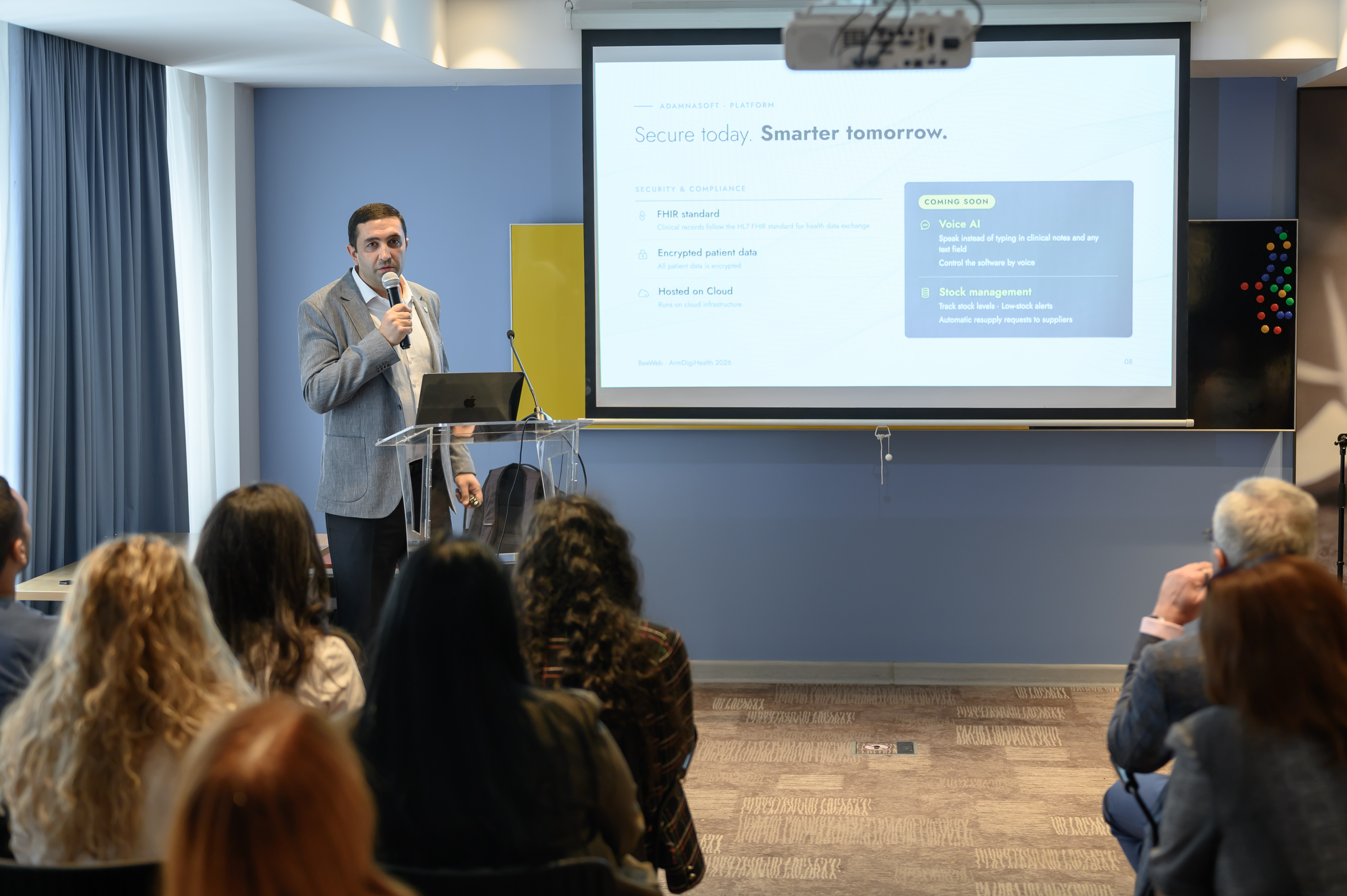
We didn't start with a feature list. We started with a question our CTO, Karen Hovhannisyan, now puts on every healthcare project: who is doing what today, and where does the time go?
Our relationship with OHFAR began with their website. That project built enough trust that they asked us to build the tool their dentists would use with children every day. A small, stable team of four has carried it from the start: a UI/UX designer, a front-end developer, a back-end developer and a project manager.
Discovery with the people who chart the teeth
Weekly alignment sessions with OHFAR's clinical leads kept the product anchored to real workflows. When a dentist explained how a mixed-dentition chart actually reads, or why a delayed arrival matters on a Smiling Day, that went straight into the design.
Short loops, real feedback
During active phases, the team synced almost daily. Designers reviewed UI prototypes with clinicians before a line of production code was written, and developers tuned performance against what dentists experienced on tablets, not on a developer's laptop.
One clear bridge
Our project manager acted as the single bridge between BeeWeb engineers and OHFAR's clinical leadership. Clinicians never had to translate their needs into technical tickets, and engineers always knew why a change mattered.
Tested in public
Adamnasoft's first public, live use was at the Armenian International Healthcare Expo. Real users, real conditions, no safety net. It was the clearest validation we could ask for that the interface worked under pressure.
Robin Ohannessian, OHFAR board member, summed up the collaboration in a 5-star Clutch review: BeeWeb delivered the website and the EDR software on time, to a high standard, and kept proposing improvements and shipping updates fast.
Under the hood: the engineering decisions that matter
A tablet-first front end
The interface is built in React with Next.js and designed for tablets from day one. Touch targets on the odontogram are sized for real fingers, and screens are laid out for a dentist standing beside a child, not sitting at a desk. Performance was tuned against what clinicians experienced on their devices during live screenings.
A modular back end
NestJS lets us organize the back end into clear domain modules: authentication and roles, patients and families, charting and treatment, scheduling and booking, payments and insurance, reports and notifications. That structure is why Adamnasoft could grow from a screening tool into a full practice platform without a rewrite. Upcoming modules like Voice AI and stock management plug into the same architecture.
Relational data for clinical logic
Dental data is deeply relational. A tooth surface belongs to a chart, a chart to a patient, a patient to a family, and every procedure carries a price, an insurance status and a payment status. PostgreSQL enforces those relationships at the database level, so the record stays consistent no matter which screen updated it.
Built to connect: HL7 FHIR
Clinical records follow HL7 FHIR, the international standard for exchanging health data. Healthcare rarely lives inside one system, and FHIR keeps the door open to labs, imaging, hospitals and future national eHealth infrastructure. Today the platform already connects outward through insurer claim workflows, Excel patient imports and automated email notifications.
Security by design
All patient data is encrypted. Access is controlled by role, so a clinic administrator, a dentist, a parent and an insurer each see only what they should. Activity logs and audit tracking are on the roadmap. Just as important, the data belongs to the clinics and dentists who enter it, not to the platform.
Scalable from one bus to a national program
AWS infrastructure lets Adamnasoft scale from a single mobile clinic to many clinics without changing how it runs. Because it is a cloud platform, every update reaches every user automatically, with no installs. Plans support unlimited patients, and a dedicated tier serves government and NGO programs with population health analytics.
Where AI fits
Voice AI is the first AI feature on the way. It follows a rule we apply across all our healthcare work: AI is one layer in a clinical system, and never the last one. It can summarize, transcribe or flag, but a clinician always reviews and decides.
Where the code meets the child
OHFAR's mission is simple to say and hard to deliver: continuous improvement of children's oral health in Armenia through prevention, treatment and research. Software can't fill a cavity. What it can do is remove the friction that stops good care from reaching more children.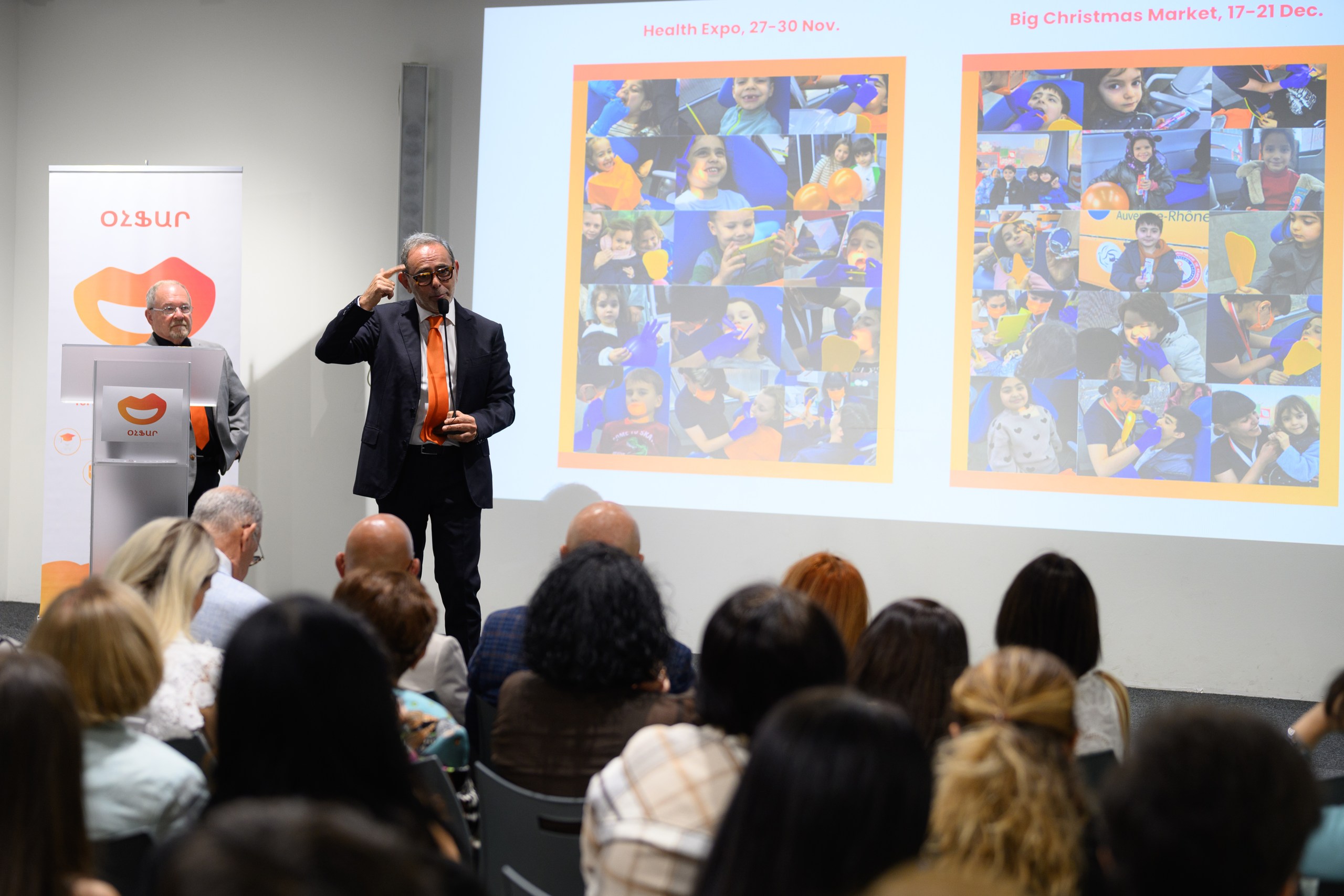
In practice, Adamnasoft supports that mission in four ways:
- Continuity across distance. A child seen in Syunik in March has a complete chart waiting when the bus returns, even if a different dentist is on board.
- More time for care. Every minute not spent on paperwork is a minute spent with a nervous six-year-old in the chair.
- Families stay informed. Parents receive care reports and recommendations, and can view their children's records and appointments from one family account.
- Evidence for policy. Aggregated screening data (DMFT scores, caries prevalence, hygiene indicators) helps show where needs are greatest. That matters now that Armenia has set up a National Working Group on Pediatric Oral Health, as OHFAR reported in July 2026.
Adamnasoft is no longer just OHFAR's tool. It is now open to every dental clinic and dentist in Armenia, from a single-chair practice to a multi-clinic team. Any dentist can create an account at adamnasoft.am and start charting their first patient in minutes. The platform is commercialized by Adamnasoft LLC, which is 100% owned by the OHFAR Foundation. So every clinic that uses it also helps support the mission it was built for.
A partnership measured in years, not sprints
Adamnasoft is not a project we handed over and walked away from. It started after the OHFAR website, has run for well over a year, and is still active.
The platform has grown alongside OHFAR. A tablet tool for pediatric screenings has become a full electronic dental record for solo dentists, multi-chair clinics, insurers, government programs and NGOs. And it is open to all of them today. Admin dashboards, activity logs and audit tracking, advanced analytics, Voice AI and stock management are all on the shared roadmap.
The lessons we took from it now shape how we approach every healthcare product, and Karen shared them at ArmDigiHealth 2026:
- Start with the workflow, not the technology.
- Build with healthcare professionals, not just for them.
- Security cannot be added later.
- Integration matters as much as the product itself.
- Technology must survive the real world. A school courtyard in Syunik is about as real as it gets.
On September 18, we sat in a room full of people who had spent a year making those principles real, one child at a time. We're proud our code is part of that, and we're looking forward to year two.
Building software for healthcare? If you want to digitize clinical workflows or build a secure health platform, book a free 30-minute technical consultation with our CTO. You'll talk to a senior engineer, not a salesperson.
Frequently asked questions
What is Adamnasoft? Adamnasoft is an all-in-one electronic dental record and practice management platform. It combines charting, treatment plans, scheduling, payments, insurance claims and analytics.
Who owns Adamnasoft? Adamnasoft is commercialized by Adamnasoft LLC, registered in Armenia and 100% owned by the OHFAR Foundation. Clinics and dentists retain ownership of the data they enter.
What technology is Adamnasoft built on? A Next.js (React) front end, a NestJS back end, a PostgreSQL database, and Amazon Web Services hosting. Clinical records follow the HL7 FHIR standard and patient data is encrypted.
Is Adamnasoft only for mobile clinics? No. Adamnasoft is open to all dental clinics and dentists. It serves solo dentists, multi-chair clinics, insurers, and government or NGO dental programs. Any dentist can sign up at adamnasoft.am.
How long did it take to build? A four-person BeeWeb team has worked on it continuously since 2025, and development is ongoing.